Home / Articles
Crooked Nose Correction Surgery: Before & After Expectations
Home / Articles
Crooked Nose Correction Surgery: Before & After Expectations
A crooked nose doesn’t always stand out to others. But for the person living with it, the asymmetry can feel quietly persistent — showing up in side profiles, in selfies, or in the way glasses sit unevenly. It’s not always about being “noticeable.” It’s about balance — and how being even slightly off can affect the entire face.
At 1mm Plastic Surgery, we see the nose as the central axis of facial harmony. A shift of just one or two millimeters — barely the width of a grain of rice — can throw off the symmetry of the eyes, the lips, and the overall impression of calm, confident beauty.
That’s why correcting a crooked nose is not just about straightening a line. It’s about restoring equilibrium — visually, functionally, and emotionally.
In this guide, we’ll walk you through the full journey of crooked nose correction surgery — from what causes nasal deviation to how surgery is customized for each patient. You’ll learn what to expect before and after, what results are realistic, and why millimeter-level precision can make all the difference.
A crooked nose isn’t always obvious to the untrained eye. But patients can feel it — in photos, when they catch their reflection, or in how they feel about their profile.
Some crooked noses are visibly deviated, where the nasal bridge clearly bends to one side. Others are more subtle — perhaps one nostril is higher, or the tip leans off-center.
“Facial symmetry is like musical harmony — one wrong note and everything feels off. Crooked nose correction is about tuning that note, not rewriting the whole song.”
At 1mm Plastic Surgery, we don’t chase extremes. We believe in micro-adjustments — because often, the most powerful transformations are subtle ones.
For crooked nose correction (often called deviated nose correction or nasal realignment rhinoplasty), our approach depends entirely on the type and cause of the deviation. Bone? Cartilage? Septum? Tip rotation? All of these matter — and each one has its own surgical roadmap.
Many patients require a combination of techniques. That’s why customization is crucial.
Most international patients are surprised at how much time we spend simply looking at their face — from all angles, in motion, and at rest. We use high-resolution imaging, facial symmetry software, and manual palpation to understand not just what’s visible, but what’s structurally causing the asymmetry.
Our philosophy? Don’t fix what isn’t broken. Enhance what can be improved — precisely, delicately.
During your consultation, expect us to ask:
How long have you noticed the crookedness?
Have you had injuries, even minor ones?
Do you have breathing issues (snoring, congestion)?
What are your aesthetic goals? More aligned? More defined?
Not every nose can — or should — be perfectly straight. Overcorrecting a naturally asymmetric face can create a strange, uncanny look. Our aim is facial harmony, not artificial perfection.
Healing from crooked nose correction isn’t just about the nose looking straight. It’s about reducing swelling evenly, avoiding scar tissue buildup, and giving the new structure time to stabilize.
Swelling and mild bruising are normal, especially around the eyes.
Some discomfort, tightness, and congestion are expected — but pain is usually minimal.
Pro tip: Sleeping with your head elevated and using cold compresses the first 72 hours can help minimize swelling.
Splint and stitches (if external) are removed within the first week.
Most visible swelling begins to subside.
Patients often return to work or light social activities within 10–14 days.
Swelling continues to reduce — especially at the tip.
Minor asymmetries or uneven swelling are common but temporary.
Breathing improvements (if septoplasty was performed) become noticeable.
The nasal tissues fully settle and refine.
Internal healing stabilizes the correction.
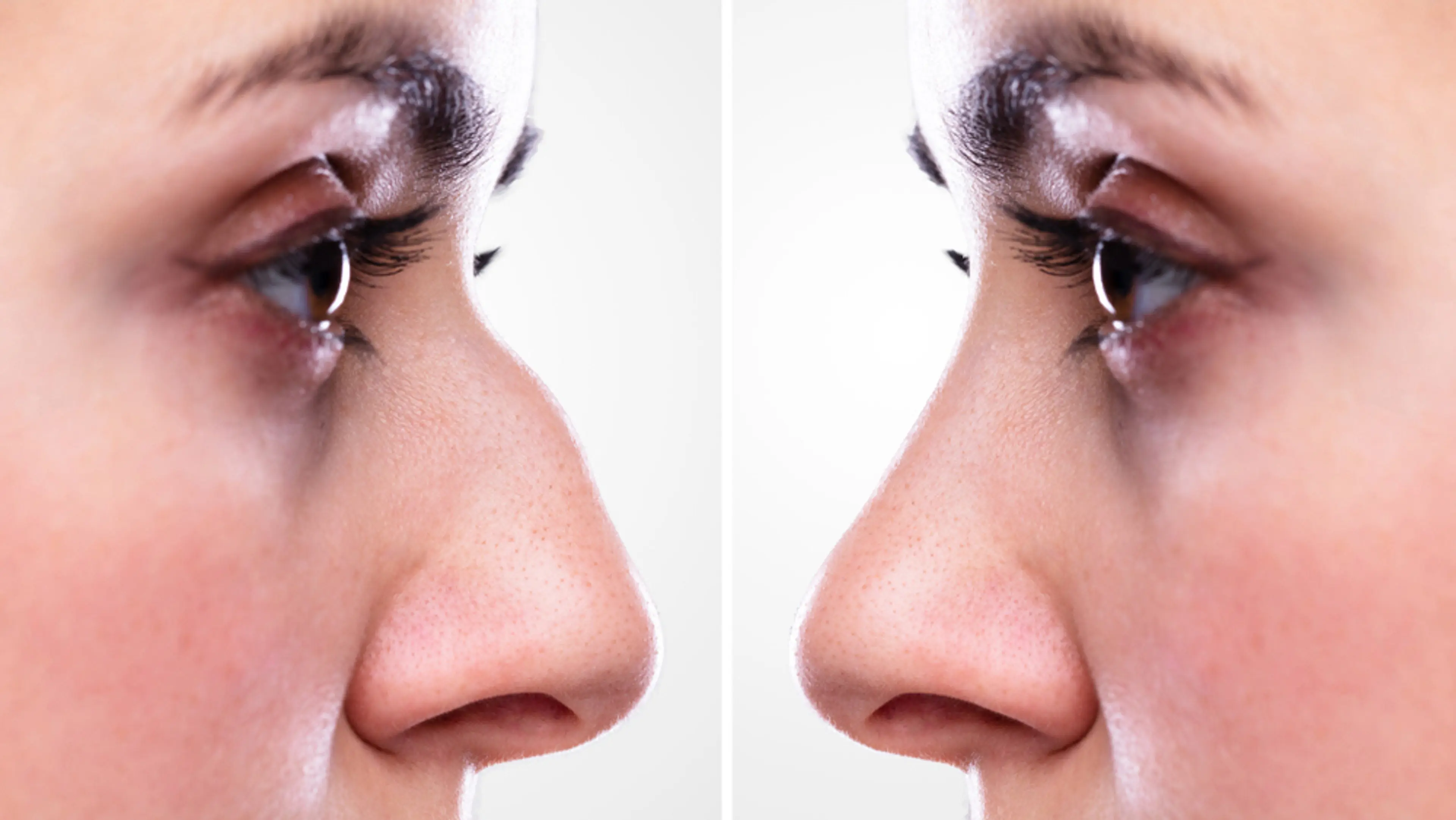
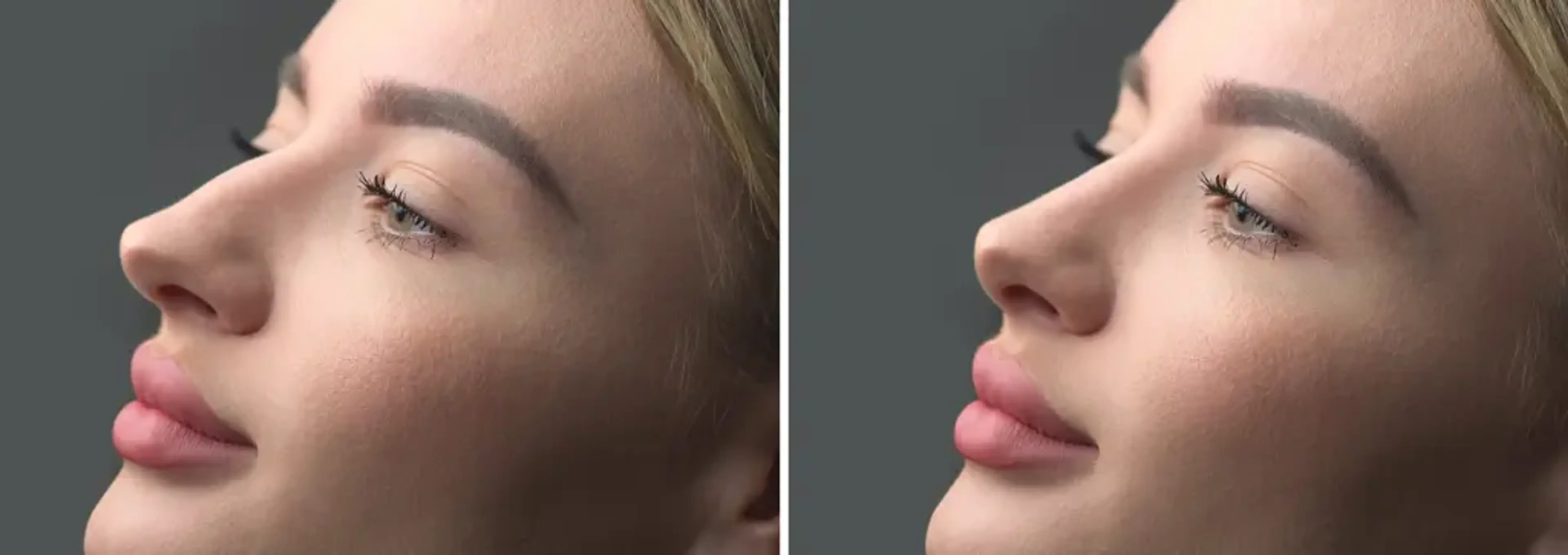
Before/after photos now show the true transformation — often with the nose appearing more centered, more intentional, yet completely natural.
Even after correction, the body heals at its own pace. Sometimes one side of the face swells more or stays puffier for a few weeks. This is normal and does not mean the nose has shifted.
If the septum was corrected, airflow changes can feel strange at first. Most patients adjust quickly and report better breathing after a few weeks.
The difference between “improved” and “wow, that’s my face” often lies in micro-measurements. That’s why we perform bone cuts (osteotomies) with micrometric control and use cartilage grafts to support the nose internally — not just sculpt it from the outside.
Ask yourself:
Do you feel your nose throws off your facial balance?
Do photos from certain angles make you feel self-conscious?
Have you had injuries that changed your nasal structure?
Do you breathe unevenly or through one nostril more than the other?
If you answered yes to one or more, it may be worth consulting a facial harmony specialist.
At 1mm Plastic Surgery, many of our patients don’t want a dramatic change — just alignment. And when the nose is brought back to center, it often makes the entire face feel calmer, more confident, and more complete.
A crooked nose is rarely just a cosmetic issue. It can subtly affect your confidence, your breathing, and your sense of symmetry — even if no one else sees it clearly.
If you're considering crooked nose correction, we invite you to consult with a team that understands how even the smallest adjustment can make the biggest difference.