Home / Articles
Ultherapy for Mild Jowls: Who’s a Good Candidate?
Home / Articles
Ultherapy for Mild Jowls: Who’s a Good Candidate?
Most patients don’t notice their jowls all at once. It usually starts with a feeling — a softer edge along the jawline, a shadow that wasn’t there a year ago, or that moment in a photo when the lower face looks just a touch heavier. Not sagging, not aging dramatically… just different.
These early changes are what we call mild jowls, and they often respond best to treatments that strengthen, rather than reshape. At 1mm Plastic Surgery in Gangnam, we see Ultherapy as one of the most elegant ways to address this stage of aging. Instead of pulling or overcorrecting, it reinforces the underlying structures so the jawline can return to its natural, youthful position.
Understanding the answer requires a nuanced look at anatomy, aging patterns, and the unique philosophy that guides our clinic — that even a one-millimeter improvement can meaningfully elevate the entire face.
Mild jowling begins when three tiny shifts occur at once:
This is the deeper support system of the face — think of it as the internal scaffolding that keeps the jaw contour crisp. Even a millimeter of descent here can soften the lower face.
This usually starts in the early 30s, though lifestyle and genetics play a role. The skin still looks youthful, but firmness is not what it once was.
This redistribution can make the jawline feel less defined even when the skin isn’t “hanging.”
Mild jowls exist in that delicate in-between space: visible enough to bother the patient, but not severe enough to require surgical lifting — which is exactly where Ultherapy often shines.
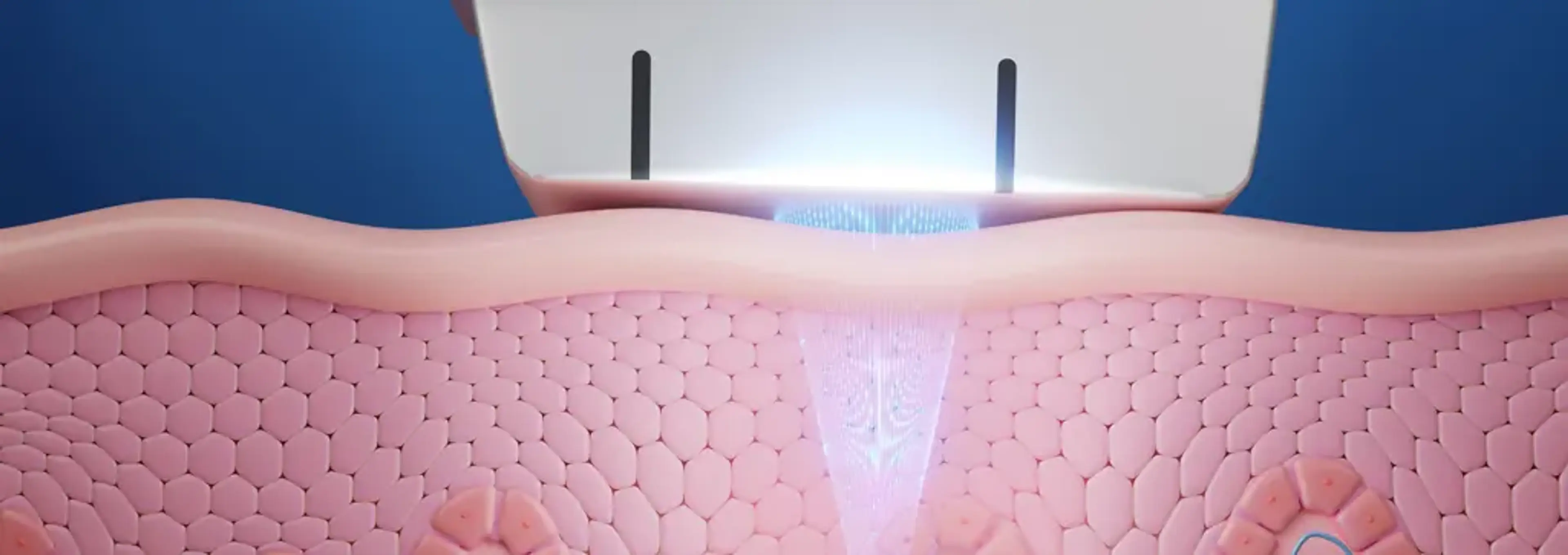
Ultherapy uses micro-focused ultrasound to send thermal energy to precise depths — including the SMAS layer, the same layer surgeons lift during facelifts. When the energy lands, it creates controlled heat points that trigger collagen remodeling and tissue contraction.
At 1mm Plastic Surgery, we explain it like this:
Ultherapy doesn’t pull the face upward. It strengthens the foundation so the face stays where it belongs.
The result isn’t dramatic — and it shouldn’t be. Our philosophy has always been about millimeter-level refinement. If a patient wants a refreshed jawline without looking “treated,” Ultherapy can be a beautiful option.
Ultherapy works best for a certain type of patient. Over the years, we’ve noticed clear patterns — the kind of nuanced details only surgeons actively performing anti-aging treatments tend to recognize.
Ultrasound lifting is perfect for naturalists.
Frequent weight fluctuations can undermine tightening results, since fat volume along the jawline affects contour. Patients with stable habits tend to see more lasting improvement.
If the tissue has descended several millimeters or the lower face shows clear sagging, no energy device can lift it meaningfully. These patients often benefit from:
Surgical SMAS lifting
Thread lifting with proper vector support
Facial fat repositioning
Ultherapy would only create frustration here.
If the collagen “factory” is compromised, the body simply cannot respond strongly enough to ultrasound stimulation.
The jawline is one of the first places where micro-strengthening can delay larger procedures by years.
From a surgical standpoint, here’s what Ultherapy does particularly well:
This is the same structural layer lifted during facelifts. Reinforcing it early can slow visible sagging.
No pulling. No distortion. Just subtle firmness.
At 1mm Plastic Surgery, we often combine Ultherapy with:
Together, these treatments create a refined jawline that looks effortless — never overdone.
We evaluate skin recoil, dermal density, and the SMAS relationship — all of which determine how well ultrasound energy will work.
Ultherapy results develop gradually, as new collagen forms and the SMAS layer contracts subtly. Many patients begin to see refinement around 6–12 weeks, with peak lifting at 3–6 months.
For mild jowls, the improvements typically include:
A cleaner jawline
Reduced early jowl bulge
Firmer lower-face texture
A refreshed, rested look without changing facial identity
Results often last 12–18 months, depending on skin quality and lifestyle.
After treating thousands of faces, we’ve found there are moments when Ultherapy becomes almost poetic in its suitability:
When a patient wants to slow aging without announcing it
When the jawline is beginning to blur, not collapse
When they want a future-facing approach — strengthening now to postpone surgery later
When refinement, not reinvention, is the goal
Mild jowls mark a pivotal moment in facial aging — a moment when the right treatment can preserve youthful definition for years, and the wrong one can lead to disappointment or unnatural results. Ultherapy, when chosen for the right candidate, offers a beautifully subtle lift that strengthens the jawline without altering your expression or identity.
If you’re beginning to notice softening along the jawline and want a natural, minimal-downtime solution, a personalized Ultherapy plan may be the ideal option. And if another treatment would serve you better, we’ll guide you toward it with complete honesty and medical responsibility.